Crisis in Venezuela: the parasidic place where almost nobody wants to live even with almost free homes
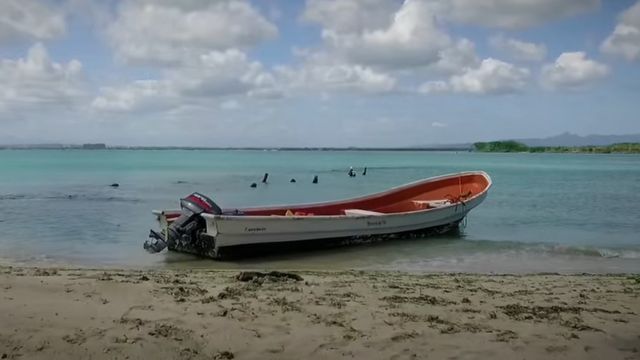
Barlovento's beaches have lost many of their visitors in recent years
For decades, Rio Chico was a perfect vacation paradise, the place next to the Caribbean where many Venezuelans went to rest and disconnect from the hustle and bustle of the city.
Now it's bursting with crime.
Every weekend, a crowd of residents of the capital, Caracas, headed east on a highway, which at the time was one of the busiest in the country in search of sun and pleasure.
In Barlovento, a region in northern Venezuela full of tourist villages and incredible beaches, many of the once elegant tourist-occupied houses are now abandoned.
Water courses, piers and even a golf course were built. The deal paid off quickly.
"In the 1980s, there was a real boom in Rio Chico of people who bought vacation homes here and came to spend weekends and rest," says López.
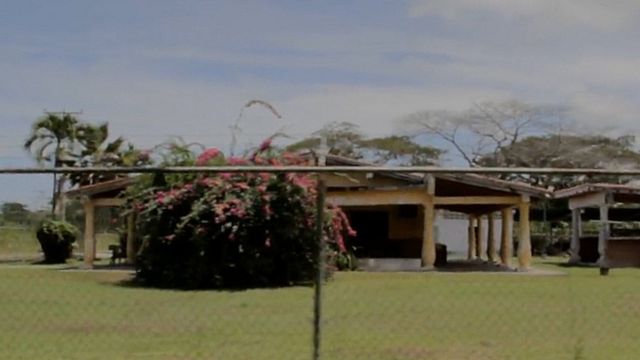
Homes like this are for sale today for $ 3,000, when a few years ago their value was much higher
What has changed
But things started to change dramatically in 2013, when the government started a negotiation process with dozens of criminal gangs to promote their disarmament and social reintegration.
So-called Quadrantes da Paz were created, territories in which, in exchange for the promise of abandoning violence, the State would stop harassing criminals and provide resources to make them economically viable without committing crimes.
Barlovento was one of those quadrants.
"These areas of peace soon became a haven for gangs. From Barlovento they conducted their criminal activities in Caracas," says López.
For the owners, an ordeal began. "First they faced small thefts, so that every time they came home to spend the weekend, they found something was missing, but then things got worse and the kidnappings started."
In addition to the country's economic deterioration, which for several years has been experiencing a deep economic crisis that has caused the migration of millions of Venezuelans, and the growing difficulties in obtaining gasoline, many give up on Barlovento forever.
"Many houses are good, with a pool and maintenance alone costs a lot of money", emphasizes López.
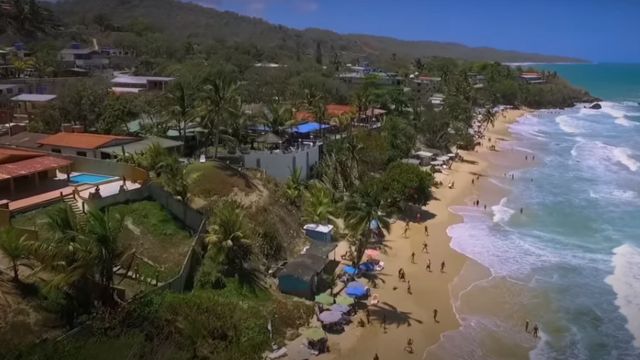
This image from a few years ago shows some of the houses in the region
Fernando Valera is one of the few who did not give up. "I've been robbed here five times," he says.
"The first time there were between 15 and 20 men with rifles and military clothes. They came out of the woods, pointed the guns at my wife and nieces, who were in the pool, and took me out of the shower."
Valera recalls that they acted with military discipline. "There was a leader who gave us orders and treated us well. The others obeyed; they took everything and left."
Others were not so "professional". "In one of the robberies they were very nervous and put a machete around my wife's neck."
"They took everything"
After so much theft, his vast property seems almost empty. The kitchen today has only the essentials; and in the living room, a pair of armchairs and an old CD player. "I don't want to have anything that calls my attention, because then they come and take everything."
Like many others who have had similar experiences in the region, his family does not want to return to the place he once dreamed of turning into an ideal resting place for them.
In 2010, he invested there what he received as compensation, when he stopped working in the textile industry in Caracas to retire to a place where "you could forget everything".
Listening to the song of the tropical birds that fly among the palm trees of your garden, it is easy to understand what it says.
But as we speak, a National Guard agent appears on a motorcycle to remind him that the BBC's recording equipment shouldn't be in sight for long. "This area is not very safe", he warns.
"Eliminated" criminals
Police presence in the Rio Chico region has recently increased and Fernando says he has lived more peacefully since a National Guard command was installed near his home. Soldiers usually stop by and check to see if he is okay.
But some of the police tactics have caused international controversy and criticism of Nicolás Maduro's government.
"Things are improving because many of the bandits that invaded this area have been eliminated," says Fernando.
He says that just a few days before our meeting, three alleged criminals were killed by the Police's Special Actions Force. He is not the only one in Rio Chico who reports that agents have invaded criminal hiding places in the forest.
The United Nations Office of Human Rights has reported thousands of these "extrajudicial executions" in Venezuela in recent years.
The government did not respond when BBC Mundo asked for information.
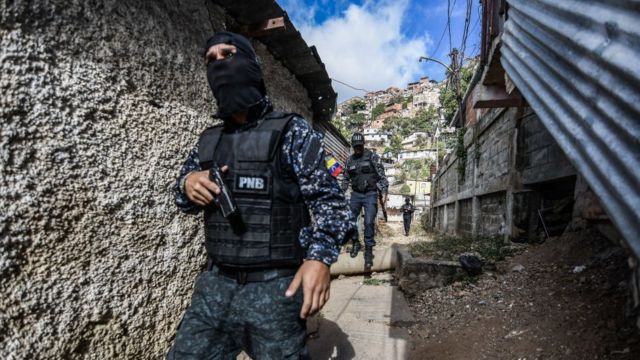
The Special Action Police Force has been accused of committing extrajudicial executions. (File image)
"It is not that I am happy that they are eliminated, but at least I hope there is peace of mind," says Valera of the murdered criminals.
Modern ruins
In the municipality of Río Chico it is not difficult to find old ruined summer villas.
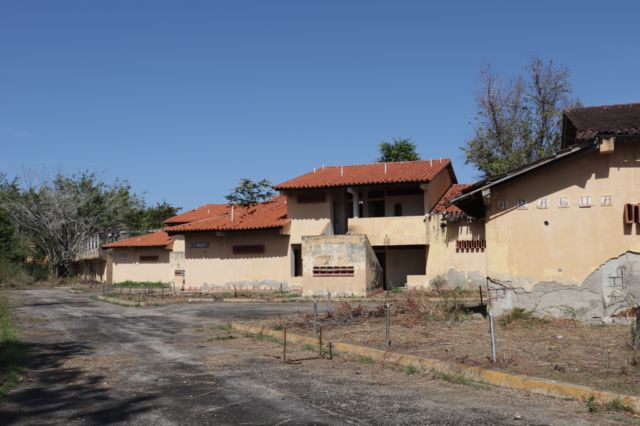
Rio Chico is dotted with empty villages that are now abandoned.
Some were owned by large companies in the country, which offered them at advantageous prices to their employees, or by the State, which long ago failed to take care of their maintenance.
Very poor families have found shelter in them and groups of barefoot children can be seen in their streets carrying buckets of water at the mercy of night mosquitoes.
Nearby is Caño Copey, the immense and deserted beach where Carlos Quintana spends his days.
He says that in his time he served in the personal escort of the late Hugo Chávez. Now he is the lifeguard on a beach he hardly ever visits.
"I spend all day sitting, looking at the water, the sand and the breeze."
The tourist ads that survive on the internet describe Caño Copey as "a place where you will have the tourist services you need to spend a peaceful day at the beach".
There are also videos on the web that show a panoramic view of the houses with swimming pools, the beaches and the network of channels that run through the region.
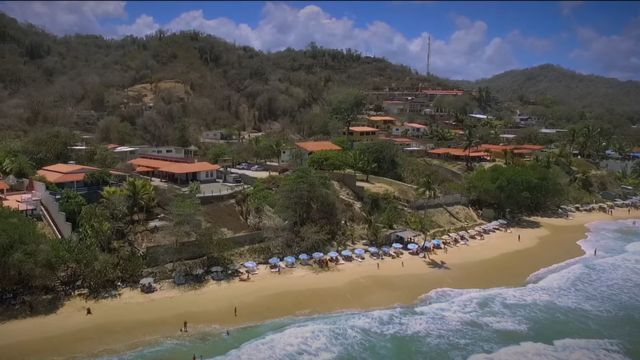
Barlovento is a traditional vacation destination for middle and upper class Venezuelans
None of these idyllic images correspond to the scenes that the lifeguard is used to.
"I once saw some tourists who had just arrived at the beach being beaten and threatened with a knife. I wanted to intervene, but I could have hurt myself."
With no urban visitors to extort or steal, it is now the region's cocoa farmers who have to pay the gangs that made Barlovento their fortress.
Whoever stayed here had to adapt to the disappearance of tourism, which further exacerbated the impact of the crisis.
Quintana, for example, feeds her two children with the bananas that grow in her garden and the sardines that she manages to fish on this lonely coast because her salary is only for a few packages of rice.
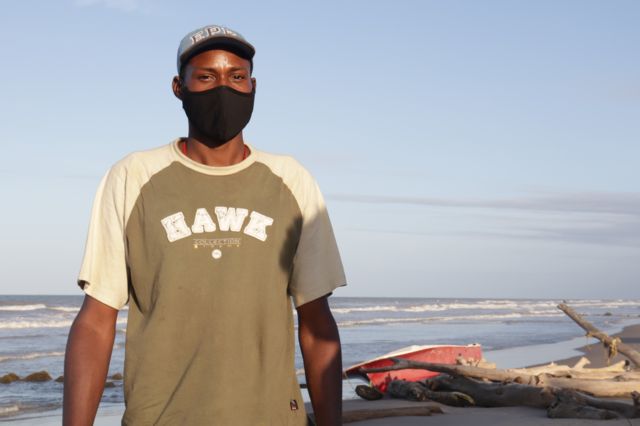
Carlos Quintana is the lifeguard of a beach where almost nobody bathes
He misses the time when things were different.
"In the carnivals or on the weekends many tourists came and there was a lot of movement in the beach villages", he explains, pointing with his finger what remains of the houses by the sea.
Quintana guides me to one of them. There is little more than the façade and the terrain, but the privileged location just a few meters from where the waves break and its generous dimensions give an idea of its past splendor.
"The owners would go up on the roof at the end of the day to watch the sunset and have a few drinks while listening to music," he recalls.
When they stopped coming, the criminals showed up. "They took the bathrooms, the doors, the windows, everything ..."
And it could have been worse. "As soon as someone appears who seems to lead a normal life, they beat or kidnap him and force him to pay for extortion."

No comments:
Post a Comment